The Explosive Birth of Nuclear Physics: From Radioactivity to Energy
How does a chunk of ordinary-looking rock end up capable of leveling a city, or of running a power plant for sixty years on a handful of fuel? The answer starts in 1896, with a French physicist who left a drawer shut for two days and stumbled onto a phenomenon nobody had a name for yet. Within half a century, that accident had grown into the deliberate splitting and fusing of atomic nuclei, and physics had produced both the deadliest weapon ever built and one of the most concentrated sources of energy known to humankind. This is the story of how nuclear physics got started: radioactivity, fission, fusion, the Manhattan Project, and the industry that followed.
Also read: Rutherford and the Discovery of the Atomic Nucleus
An accident with a photographic plate
In early 1896, Henri Becquerel was investigating the newly discovered X-rays and wanted to know whether certain glowing minerals emitted them too. His plan involved exposing uranium salts to sunlight and then placing them on photographic plates. But a run of cloudy days in Paris left his materials sitting in a drawer, unexposed to any light at all. When Becquerel developed the plates anyway, he found them fogged, as if the uranium had been giving off radiation the whole time, sunlight or not.
That was the discovery of radioactivity: certain elements spontaneously emit penetrating radiation with no external trigger required, simply because their nuclei are unstable. Becquerel had found something genuinely new, not a form of reflected or induced X-rays but a property built into the atom itself, and it would earn him a share of the first Nobel Prize awarded for the phenomenon.
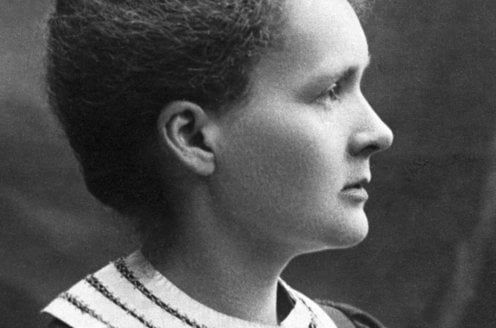
Becquerel’s discovery reached Marie Skłodowska Curie, a young Polish physicist working in Paris, who decided to make it the subject of her doctoral research. Working with her husband Pierre, she systematically tested minerals for the same effect and noticed something odd: pitchblende ore was far more radioactive than the uranium it contained could explain on its own. The Curies concluded that the ore must hold additional, undiscovered radioactive elements, and after years of grinding through tons of ore in a converted shed, they isolated two of them: polonium, named for Marie’s homeland, and radium, far more radioactive than uranium itself. The 1903 Nobel Prize in Physics went to Becquerel and the Curies jointly, and Marie Curie later became the first person to win a second Nobel, in Chemistry, for isolating pure radium metal.
Mapping what radioactivity actually is
Discovering that atoms could be radioactive was one thing. Understanding what radioactivity actually consisted of was another, and that task fell largely to Ernest Rutherford, a New Zealand-born physicist working in Britain. In 1899, Rutherford showed that radioactive emissions were not a single, uniform kind of ray. He identified at least two distinct types, which he called alpha and beta radiation, distinguished by how easily they were absorbed by matter.
Working with the chemist Frederick Soddy, Rutherford pushed further and found that radioactive materials didn’t just emit particles passively, they transformed. A radioactive element decaying would sometimes produce entirely different elements as a byproduct, along with helium gas. In 1902, the two proposed something that would have sounded like alchemy to an earlier generation of chemists: atoms of one element could spontaneously disintegrate and turn into atoms of a different element. This idea of radioactive decay as a form of transmutation reframed the atom from an indivisible, unchanging unit into something with internal structure and internal instability, which was the conceptual opening nuclear physics needed.
The particle that unlocked the nucleus
By the early 1930s, physicists knew atoms had a dense central nucleus, discovered by Rutherford himself, but the composition of that nucleus was still a puzzle. In 1930, German physicists Walter Bothe and Herbert Becker had bombarded beryllium with alpha particles and produced a mysterious, highly penetrating radiation that some suspected was a new, powerful form of gamma rays.
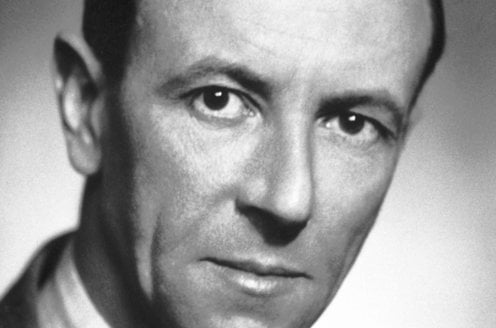
In 1932, James Chadwick, working at the Cavendish Laboratory in Cambridge, proved otherwise. Through a careful series of experiments, he showed the radiation actually consisted of a neutral particle with roughly the mass of a proton, exactly the kind of particle Rutherford had predicted years earlier might exist inside the nucleus. Chadwick had found the neutron, and it earned him the 1935 Nobel Prize in Physics. The discovery mattered enormously because, unlike a proton, a neutron carries no electric charge. That meant it could approach and enter an atomic nucleus without being repelled, making it an ideal tool for probing, and eventually splitting, the nucleus.
Splitting the atom
Enrico Fermi in Rome picked up that tool almost immediately. Starting in 1934, his group bombarded heavy elements, including uranium, with neutrons and found that slowing the neutrons down first, for instance by passing them through paraffin, dramatically increased how often they were captured by nuclei. This let Fermi’s team generate a whole range of new radioactive isotopes, work that won him the 1938 Nobel Prize in Physics. At the time, Fermi believed some of his uranium experiments had produced a brand-new transuranic element heavier than uranium itself.
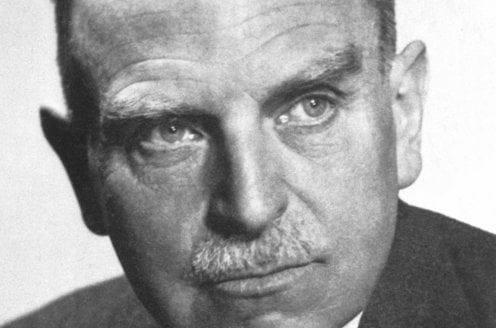
He was wrong, in the most productive way possible. Chemists in Berlin, Otto Hahn and Fritz Strassmann, followed up on Fermi’s results and by late 1938 found something that made no chemical sense: bombarding uranium with neutrons was producing barium, an element roughly half the mass of uranium. Barium had no business showing up as a decay product of a heavier element. Hahn corresponded with his longtime collaborator Lise Meitner, who had fled Nazi Germany for Sweden that same year, and her nephew Otto Frisch. Working through the physics from Stockholm, Meitner and Frisch supplied the explanation Hahn’s chemistry couldn’t: the uranium nucleus wasn’t decaying in the usual sense, it was violently splitting into two much lighter nuclei, releasing energy in the process. Frisch borrowed a term from cell biology and called it fission.
The mechanics of fission turn out to matter as much as the discovery itself. When a uranium-235 nucleus absorbs a neutron and splits, it doesn’t just release energy, it also throws off two or three additional free neutrons. Each of those can go on to strike another uranium nucleus and trigger another split, which releases more neutrons still. Given enough fissionable material packed closely enough together, a quantity known as critical mass, this becomes a self-sustaining chain reaction: controlled, it can generate steady heat for power; uncontrolled, it multiplies explosively. Otto Hahn received the Nobel Prize in Chemistry for the discovery of fission, awarded in 1944 though not presented to him until the following year.
From physics paper to weapon
Fission’s chain-reaction potential was recognized almost the moment Meitner and Frisch published their explanation in Nature in early 1939, and physicists on both sides of the widening war understood what it might mean. In the United States, that recognition eventually became the Manhattan Project, the wartime effort that gathered scientists at Los Alamos and elsewhere to turn the physics of fission into a working weapon.
A great deal of the Manhattan Project’s scientific labor went into calculating exactly how a chain reaction could be triggered and sustained on demand. Fermi, who had emigrated to the United States, built the first human-made self-sustaining nuclear reactor, and his team worked out the multiplication factor that determined whether a reaction would fizzle, hold steady, or run away into a full explosion. Getting enough fissionable uranium-235 or plutonium into one place, fast enough and tightly enough, to reach criticality before the reaction blew itself apart was the central engineering problem of the bomb designs that followed, solved through two different approaches: a simpler gun-type design and a more sophisticated implosion design. The first fission bombs were used in August 1945, ending the war in the Pacific and opening the nuclear age.
The Super: fusion enters the picture
Fission wasn’t the only nuclear process physicists had their eye on. Where fission releases energy by splitting heavy nuclei apart, fusion releases energy by forcing light nuclei together, and it works best with the lightest element of all: hydrogen. Two hydrogen isotopes in particular, deuterium and tritium, turned out to be especially promising fusion fuel.
As early as a 1942 meeting at Berkeley involving J. Robert Oppenheimer and Edward Teller, physicists had discussed the theoretical possibility of a fusion-based weapon, nicknamed the Super, powered by a fission bomb acting as its trigger. Wartime priority stayed with fission, since the Super depended on a working fission bomb anyway and the physics of igniting deuterium proved harder than expected. Teller continued pursuing it after the war, and the effort gained urgency once the Soviet Union tested its own fission device in 1949. In 1951, Teller and mathematician Stanislaw Ulam worked out a workable design: using the intense burst of X-rays from a fission explosion to compress a separate fusion fuel component, a method called staged radiation implosion. The United States tested the first full-scale thermonuclear device in November 1952, an explosion equivalent to more than ten million tons of TNT and roughly 700 times more powerful than the fission bomb dropped on Hiroshima. Unlike fission bombs, which are capped by how much fissile material can be assembled before it reaches critical mass on its own, fusion bombs have no comparable size limit.
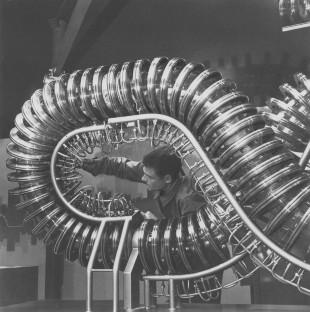

Fusion research didn’t stay confined to weapons for long, though. From the 1950s onward, the pursuit of controlled fusion as a power source became one of the more unusual chapters in Cold War science: a field where the major powers, through forums like the International Atomic Energy Agency, chose international cooperation over secrecy, sharing fusion research even while competing fiercely elsewhere. That cooperative tradition eventually produced devices like the tokamak, pioneered in the Soviet Union, and international projects like ITER, still working today toward the long-standing goal of a fusion reactor that produces more energy than it consumes.
From weapon to power plant
The same chain reaction that makes a fission bomb possible, if slowed down and kept just at the edge of self-sustaining rather than multiplying, is also what runs a nuclear power reactor. Instead of releasing all its energy in a fraction of a second, a reactor core releases it steadily, as heat, which is used to boil water, drive turbines, and generate electricity. The physics is the same chain reaction Fermi first calculated at Los Alamos; only the pace and the purpose differ.
That dual nature has shaped nuclear physics’ public reputation ever since: the same discoveries that ended a war catastrophically also became a major source of low-carbon electricity generation worldwide, overseen today by international bodies built specifically to monitor and regulate nuclear material and its uses.
What the physics doesn’t settle
It’s worth being clear about what these discoveries did and didn’t resolve. The nuclear physics of the 1930s and 40s explained how fission and fusion release energy and how chain reactions propagate, but it didn’t determine how that power ought to be used, a question that remained, and remains, a matter of politics, ethics, and policy rather than physics. Controlled fusion power, despite research stretching back over seventy years, still hasn’t been achieved at a commercial scale; sustaining a fusion reaction that produces net energy gain has proven to be a far harder engineering problem than igniting one in a bomb. And even fission’s history contains real scientific uncertainty in its early stages: Fermi initially misidentified what his neutron-bombarded uranium had produced, and it took Hahn, Strassmann, Meitner, and Frisch working together across a chemistry lab and a physics correspondence to arrive at the correct explanation.
Closing thought
What’s striking about this whole period, from Becquerel’s fogged photographic plate to the first thermonuclear test eight years after Hiroshima, is how fast it moved. Fewer than sixty years separate the accidental discovery of radioactivity from a weapon capable of leveling a city with room to spare, and the same span of research also laid the groundwork for reactors now supplying power to hundreds of millions of people. Nuclear physics didn’t just add a new chapter to the textbook; it changed, permanently, what physics could do in the world.
Sources
- Henri Becquerel and the Discovery of Radioactivity — Nobel Prize: https://www.nobelprize.org/prizes/physics/1903/becquerel/facts/
- Marie Curie – Nobel Prize: https://www.nobelprize.org/prizes/physics/1903/marie-curie/facts/
- Pierre Curie – Nobel Prize: https://www.nobelprize.org/prizes/physics/1903/pierre-curie/facts/
- Ernest Rutherford – Nobel Prize: https://www.nobelprize.org/prizes/chemistry/1908/rutherford/facts/
- James Chadwick – Discovery of the Neutron: https://www.nobelprize.org/prizes/physics/1935/chadwick/facts/
- Enrico Fermi – Nobel Prize: https://www.nobelprize.org/prizes/physics/1938/fermi/facts/
- Otto Hahn – Nobel Prize: https://www.nobelprize.org/prizes/chemistry/1944/hahn/facts/
- Manhattan Project: Science — Nuclear Physics, Fission and Chain Reaction: https://www.osti.gov/opennet/manhattan-project-history/Science/NuclearPhysics/fission.html
- Manhattan Project: Science — Hydrogen Bomb: https://www.osti.gov/opennet/manhattan-project-history/Science/BombDesign/hydrogen-bomb.html
- Manhattan Project: Science — Nuclear Chain Reaction: https://www.osti.gov/opennet/manhattan-project-history/Science/NuclearPhysics/chain-reaction.html
- Nature Physics – A Brief History of Nuclear Fusion: https://www.nature.com/articles/s41567-020-0940-7
- World Nuclear Association: https://world-nuclear.org/




One Comment