How 3 Brilliant Physicists Created the Quantum Revolution
In the summer of 1925, a 23-year-old German physicist retreated to a treeless, wind-scoured rock in the North Sea to escape a bad case of hay fever, and came back with the mathematics that would end classical physics’s two-century run. Within eighteen months, a rival formulation appeared from Zurich built on entirely different ideas, the two were shown to be secretly the same theory, and a third physicist worked out what the whole thing actually meant. What emerged — matrix mechanics, wave mechanics, and the probability interpretation that stitched them together — is still, a century later, the working theory of atoms, and still the source of arguments about what reality is made of.
This is the story of how quantum mechanics got its final form: not as one discovery but as a compressed, competitive burst of insight from Werner Heisenberg, Erwin Schrödinger, and Max Born between 1925 and 1927.
Also read: Atoms and Quantum Leap: Mind-Blowing Truths About Bohr’s Model
Table of Contents
A theory patched together with tape
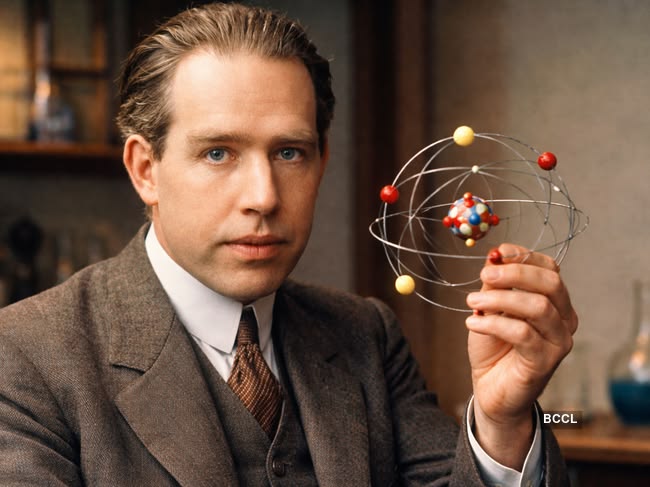
By the early 1920s, physics had a problem it couldn’t hide from any longer. Niels Bohr’s 1913 model of the atom — electrons circling the nucleus in fixed orbits, jumping between them by absorbing or emitting light — had explained the spectrum of hydrogen with real precision. But it was a patchwork. It borrowed the language of classical mechanics, orbits and velocities and trajectories, while quietly forbidding the orbits that classical physics said should be unstable. It could not account for the spectra of anything more complicated than hydrogen. And nobody could say why the rules were the rules; they worked, which was reason enough to keep them, but they weren’t derived from anything deeper.

Max Born, who ran the theoretical physics institute at Göttingen, put it bluntly in 1923: physics needed to be rebuilt from the ground up. His junior colleague, a restless 21-year-old named Werner Heisenberg, had spent the previous year shuttling between Göttingen and Bohr’s institute in Copenhagen trying to find the new foundation. By the spring of 1925 that effort had produced mostly frustration.
Heisenberg’s retreat to Helgoland
Heisenberg’s breakthrough came out of a decision to stop trying to picture the atom at all. If nobody could actually observe an electron’s orbit or trajectory, he reasoned, then a orbit or trajectory had no business appearing in the theory. Physics should be built only from quantities an experiment could actually register — in this case, the frequencies and intensities of the light atoms emit when electrons change energy states.
He worked this out, of all places, on Helgoland, a small sandstone island in the North Sea where he’d gone in June 1925 to nurse a severe bout of hay fever. Free of pollen and mostly free of distraction, he spent his nights doing calculations and reportedly climbed a rock at dawn to watch the sunrise after he’d convinced himself the scheme was consistent. The paper that resulted, “On the Quantum-Theoretical Reinterpretation of Kinematic and Mechanical Relations,” submitted that July, replaced the classical variables of position and velocity with arrays of numbers — tables of transition frequencies and their strengths — that had to be combined by rules Heisenberg worked out from physical reasoning rather than any established mathematics.

When Heisenberg brought the draft back to Göttingen, Born recognized the strange multiplication rule immediately: it was the algebra of matrices, a branch of pure mathematics that physicists at the time rarely touched. Multiplying two of these arrays in one order gave a different answer than multiplying them in the other — the arrays didn’t commute — and that single fact turned out to encode something physically real, not just a mathematical inconvenience. Born, working with his student Pascual Jordan and then with Heisenberg himself, spent the rest of 1925 turning the idea into a full theory. Their three-part sequence of papers, the last completed that November, is what’s usually meant by matrix mechanics: the first working version of quantum theory, built entirely on what could be measured and nothing else.
A second answer, from a different direction
Matrix mechanics worked, but almost nobody besides its authors could use it comfortably; multiplying infinite arrays by hand is not most physicists’ idea of a good time. Then, at the end of 1925 and into early 1926, Erwin Schrödinger — a 38-year-old Austrian physicist in Zurich, well outside the Göttingen–Copenhagen axis — arrived at a second, completely different formulation.
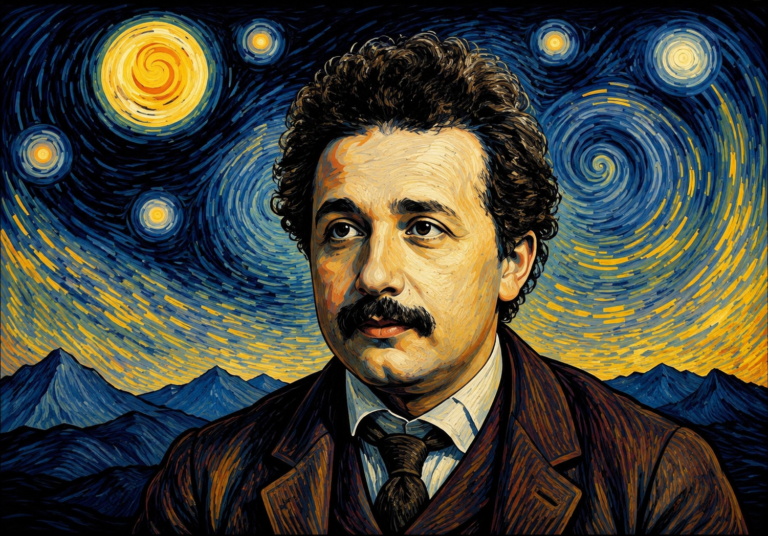
Schrödinger’s starting point was a 1924 idea from the French physicist Louis de Broglie that had attracted little attention: if light, understood for over a century as a wave, could also behave as a stream of particles, then perhaps matter — electrons, atoms — could also have a wave aspect. Schrödinger took this seriously enough to go looking for the wave equation an electron might obey, and by early 1926 he had one. His equation described a continuously varying quantity, which he called the wave function, spread through space and evolving smoothly in time — mathematics that any physicist trained in classical wave theory could recognize and use.
.jpg)
Schrödinger’s wave mechanics caught on fast, for the simple reason that it was easier. It let physicists solve for atomic energy levels using techniques from acoustics and optics that were already decades old. Within months, physicists showed that Schrödinger’s wave mechanics and Heisenberg’s matrix mechanics were mathematically equivalent — two descriptions of the same underlying theory, related by a change of representation. That equivalence was reassuring. It meant quantum mechanics wasn’t a matter of taste between competing theories; there was one theory, wearing two different mathematical costumes.
What is the wave function actually describing?
The mathematical peace didn’t extend to physical interpretation. Schrödinger wanted his wave function to be a real, physical wave, something like a smeared-out cloud of electric charge — the kind of picture a classically trained physicist could feel at home with. Heisenberg, who had built his own theory precisely by refusing to picture anything unobservable, found this deeply unsatisfying and privately called Schrödinger’s interpretation repellent. The disagreement wasn’t cosmetic. If the wave function were a real charge density, quantum mechanics would still be a classical-style field theory with a strange equation attached. If it wasn’t, something much odder was going on.

The resolution came from Max Born in the summer of 1926, in a short paper on particle scattering. Born proposed that the wave function itself isn’t directly observable and doesn’t correspond to any physical stuff spreading through space. What’s physical is its squared magnitude, which gives the probability of finding a particle at a given location if you go looking for it. Before a measurement, an electron doesn’t have a definite position that’s merely unknown; the theory only supplies the odds of where it will turn up.

This is the idea usually called the Born rule, and it’s the reason quantum mechanics is often described as inherently probabilistic rather than merely uncertain out of ignorance. It’s a strange claim to make about nature, and Born himself wasn’t fully confident in it when he first proposed it. But every experimental test since has upheld it, from electron diffraction to the double-slit experiment repeated one particle at a time, where individual detections build up an interference pattern that only makes sense if each particle’s probability wave has explored every path available to it.
Heisenberg’s uncertainty principle
The last major piece fell into place in early 1927. Heisenberg, working through the mathematical structure of his own theory, showed that certain pairs of properties — most famously position and momentum — can’t both be known to arbitrary precision at once. This wasn’t a claim about clumsy instruments disturbing a system, though Heisenberg did initially illustrate it that way, using the thought experiment of a gamma-ray microscope whose own light would kick an electron off course. It was a structural feature of the theory itself: the more sharply a wave function is localized in position, the more spread out it necessarily is in momentum, and vice versa, in the same way a short, sharp pulse of sound is built from a broad spread of frequencies while a pure musical tone is smeared out in time.
Together, matrix mechanics, wave mechanics, the Born rule, and the uncertainty principle gave quantum theory both a working mathematics and, roughly, a physical meaning. Niels Bohr folded these pieces into a broader philosophical stance he called complementarity — the idea that a quantum system’s wave-like and particle-like descriptions are both necessary and mutually exclusive, each valid only in the context of a particular experimental setup — and by the late 1920s this cluster of ideas had become the working consensus that’s still taught to physics students as the Copenhagen interpretation, even though historians now generally agree that Bohr’s own version of it differed in real ways from Heisenberg’s more subjectivist gloss on the same ideas.
Why it mattered beyond the equations
What made 1925 to 1927 more than a technical fix to Bohr’s atomic model was the size of the conceptual break involved. Classical physics, for all its complexity, rested on an assumption so basic it rarely got stated out loud: that objects have definite properties whether or not anyone is measuring them, and that in principle a complete description of an isolated system determines everything that will happen to it next. Quantum mechanics, in the form Heisenberg, Schrödinger, and Born gave it, abandoned both of those assumptions. Properties like position and momentum become definite only in relation to a measurement; before that, the theory gives you only probabilities, and even those probabilities can interfere with each other, cancelling out possibilities that would each individually be perfectly ordinary.
This is also, not coincidentally, the theory that made the rest of twentieth-century physics and a good deal of twentieth-century technology possible — semiconductors, lasers, the structure of the periodic table, nuclear physics, and eventually quantum computing all trace back to this framework. But the philosophical unease it created never fully went away. Einstein spent the rest of his career unconvinced that a fundamentally probabilistic theory could be the last word, and the debate about what, if anything, is happening to a quantum system between measurements — whether the wave function is a real physical entity, a bookkeeping device, or something else altogether — is still an active area of research in the foundations of physics today.
What’s settled and what isn’t
The mathematics from this period is not in dispute. Matrix mechanics and wave mechanics are provably equivalent formulations of the same theory, the Born rule has passed a century of experimental tests, and the uncertainty principle is a theorem, not a hypothesis. What remains genuinely open is interpretation: what the wave function is, whether the apparent randomness in measurement outcomes is fundamental or reflects some deeper, so-far-hidden structure, and how a measurement’s collapse from many possibilities to one actual outcome should be understood. Physicists broadly agree on how to use the theory to make predictions; they still disagree, sometimes sharply, on what the theory is telling us about the world underneath those predictions.
A hundred years on, that disagreement hasn’t slowed the theory down. Quantum mechanics remains the most precisely tested framework in the history of science, verified to extraordinary accuracy in everything from atomic clocks to particle colliders. What Heisenberg worked out on a pollen-free island, what Schrödinger built from a half-forgotten idea about matter waves, and what Born recognized in a scattering calculation together make up the mathematical skeleton of modern physics — even if what that skeleton means, at bottom, is still being argued over.
Sources
- Werner Heisenberg, “Über quantentheoretische Umdeutung kinematischer und mechanischer Beziehungen” (1925): https://link.springer.com/article/10.1007/BF01328377
- Max Born, Werner Heisenberg & Pascual Jordan, “Zur Quantenmechanik II” (Dreimännerarbeit, 1926): https://link.springer.com/article/10.1007/BF01379806
- Erwin Schrödinger, “Quantisierung als Eigenwertproblem” (1926): https://link.springer.com/article/10.1007/BF01397480
- Erwin Schrödinger, Collected Papers on Wave Mechanics: https://archive.org/details/collectedpapersonwavemechanics
- Max Born, “Zur Quantenmechanik der Stoßvorgänge” (Born Rule, 1926): https://link.springer.com/article/10.1007/BF01397477
- Werner Heisenberg, “Über den anschaulichen Inhalt der quantentheoretischen Kinematik und Mechanik” (Uncertainty Principle, 1927): https://link.springer.com/article/10.1007/BF01397280
- Paul A. M. Dirac, “The Fundamental Equations of Quantum Mechanics”: https://royalsocietypublishing.org/doi/10.1098/rspa.1925.0150
- Louis de Broglie, Matter Waves (Nobel Lecture): https://www.nobelprize.org/prizes/physics/1929/broglie/lecture/
- Werner Heisenberg – Nobel Prize Biography: https://www.nobelprize.org/prizes/physics/1932/heisenberg/biographical/
- Werner Heisenberg – Nobel Lecture: https://www.nobelprize.org/prizes/physics/1932/heisenberg/lecture/
- Erwin Schrödinger – Nobel Prize Biography: https://www.nobelprize.org/prizes/physics/1933/schrodinger/biographical/
- Erwin Schrödinger – Nobel Lecture: https://www.nobelprize.org/prizes/physics/1933/schrodinger/lecture/
- Max Born – Nobel Lecture: https://www.nobelprize.org/prizes/physics/1954/born/lecture/
- American Physical Society – June/July 1925: Werner Heisenberg Pioneers Quantum Mechanics: https://www.aps.org/apsnews/2025/07/werner-heisenberg-pioneers-quantum-mechanics
- APS Physics Magazine – The Tumultuous Birth of Quantum Mechanics: https://physics.aps.org/articles/v18/24
- Nature – How Quantum Mechanics Emerged in a Few Revolutionary Months 100 Years Ago: https://www.nature.com/articles/d41586-024-04217-0
- MIT OpenCourseWare – Waves and Probabilities (Lecture 11): https://ocw.mit.edu/courses/sts-042-einstein-oppenheimer-feynman-physics-in-the-20th-century-fall-2020/mitsts_042j_f20_lec11.pdf
- MIT OpenCourseWare – Quantum Weirdness (Lecture 12): https://live.ocw.mit.edu/courses/sts-042-einstein-oppenheimer-feynman-physics-in-the-20th-century-fall-2020/mitsts_042j_f20_lec12.pdf
- Heisenberg-Gesellschaft – The Development of Quantum Mechanics (1925–1927): https://www.heisenberg-gesellschaft.de/3-the-development-of-quantum-mechanics-1925-ndash-1927.html
- Nobel Prize Educational – The Final Formulation of Quantum Mechanics: https://educationalgames.nobelprize.org/educational/physics/quantised_world/final-1.html
- Nobel Prize Educational – Schrödinger and Wave Mechanics: https://educationalgames.nobelprize.org/educational/physics/quantised_world/final-5.html
- NobelPrize.org – The Nobel Prizes in Physics (Quantum Mechanics History): https://www.nobelprize.org/nobel_prizes/themes/physics/karlsson/
- OSTI – Niels Bohr’s Discussions with Einstein, Heisenberg and Schrödinger: https://www.osti.gov/biblio/5999501
- American Physical Society – 1927: Heisenberg’s Uncertainty Principle: https://www.aps.org/apsnews/2008/02/1927-heisenberg-uncertainty-principle
- Aitchison, MacManus & Snyder – Understanding Heisenberg’s ‘Magical’ Paper of July 1925: https://arxiv.org/abs/quant-ph/0404009
- Norbert Straumann – Schrödinger Discovery of Wave Mechanics: https://arxiv.org/abs/quant-ph/0110097
- Maurice de Gosson – Born–Jordan Quantization and the Equivalence of Matrix and Wave Mechanics: https://arxiv.org/abs/1405.2519
- Anna Galler et al. – Schrödinger’s Original Quantum-Mechanical Solution for Hydrogen: https://arxiv.org/abs/2007.14798
- Stanford Encyclopedia of Philosophy – Quantum Mechanics: https://plato.stanford.edu/entries/qm/
- Stanford Encyclopedia of Philosophy – Copenhagen Interpretation of Quantum Mechanics: https://plato.stanford.edu/entries/qm-copenhagen/
- Stanford Encyclopedia of Philosophy – Quantum Entanglement and Information: https://plato.stanford.edu/entries/qt-entangle/


2 Comments